Fall Beers

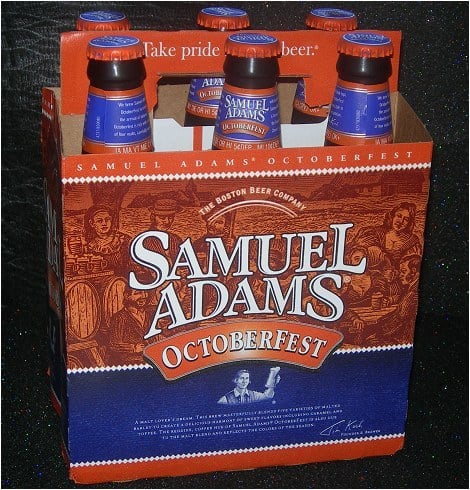
So, what is up with all the fall/autumn/pumpkin/fest beers being out already?  It's the middle of August.  It is hot still.  I, personally, don't really want to see those in the shelf til after Labor Day.  Autumn doesn't even start until September 21.  Maybe you've had similar thoughts.

I liken it to being able to buy a 2013 car now.  It is like we are living in the future!  But facetiousness aside, if you are releasing a pumpkin beer or a harvest ale on August 1, that means you were brewing it in June.  Where do you buy pumpkin in June?  Surely you aren't getting the freshest pumpkins around...  Expired canned pumpkin anyone?  If you are releasing a fest beer, at least there aren't any special, seasonal ingredients.  But it takes longer to make.  When were you brewing that one?  May?  April?  Earlier?

I understand trying to get your product out first so people see it, remember it, and buy it.  But give us a little bit of a break and at least wait until the temperatures drop out of the 90s.

I'll be holding off on the pumpkin beers for a little while.  How about you?  Are you excited to see all the fall beers out now or do you wish they would wait?

Comments

  1. I wish they'd wait, but that still didn't stop me from buying some Sam Adams Octoberfest last week. I have no idea when they'll 'stop' selling it, so I figured I better get it now before I wait until its too late and they have the Christmas beer out in October....

    ReplyDelete
  2. I will be curious to see which comes out first: Christmas beers or Christmas decorations.

    ReplyDelete

Post a Comment

Popular posts from this blog

Equipment Progression

I am an all-grain, fermentation-controlled, kegging homebrewer (with other bells and whistles thrown in there, too).  But I didn't start out that way.  I was thinking about my progression as a homebrewer and wondering if I would change anything about my journey (hindsight is 20/20).  So, I made a list of my progression.  The list below doesn't contain every gadget or step, and some steps include multiple purchases/equipment, but it hits key milestones.  Here is a brief overview of how I have progressed so far as a homebrewer: Extract on the stove top Wort chiller Turkey fryer/Burner for outdoor use Kegerator Pump Fermentation control Yeast starters All-grain (all the equipment at once) Plate Chiller Oxygenation system So, what would I change?  How would I choose to progress now that I am more advanced?  Or, I guess a pertinent question also is, where did I get the most bang for my buck?  What was most worth the money?  Below is m...

First of many...

So, while Eric and I are figuring out our mash tun and boil kettle situation, I decided it would be good to go ahead and purchase/create some things I know we want.  One benefit of this is I can use it now for extract batches until we get up and running with the all-grain setup. The first thing I invested in was the quick disconnects (QDs from here on out) and high-temp tubing.  The QDs are sold in 2 pieces, male and female connections.  They are simple enough to install, assuming that all your sizes are compatible.  Since everything was 1/2", I was golden.  Funny how things like that work when you plan ahead.  Anyways, I just slipped the barb from the female QD into the hose and clamped it on with a screw clamp.  Simple as that. I got three hoses, so six female connections.  All it took was a screw driver.  I got a few male connections which will be attached to mash tun, boil kettle, and the pump.  There are a couple of them...

Yeast Experiment: Episode 1

A lot of things go into making a good beer.  There is the obvious - the malt and the hops; there is the process and procedure - how long did you mash/boil/hop, etc.; there is the cleanliness and sanitation - no funky bugs in the beer.  All of these can be tweaked one way or another and changing just one thing will give a different tasting beer than before. Working on recipes, one often wants to improve or change a little piece to see what happens.  And one of the difficulties is having to brew an entirely new batch of beer to change one hop addition or to mash four degrees higher.  But, there is one ingredient that can be used several times from one batch of wort.  And that ingredient, is yeast. Yeast, arguably, is the most important ingredient in beer.  Without yeast, one does not have beer at all.  And, to be honest, it isn't really an "ingredient" at all, but rather a living organism that takes your sugar-sludge and turn it into delicious beer...